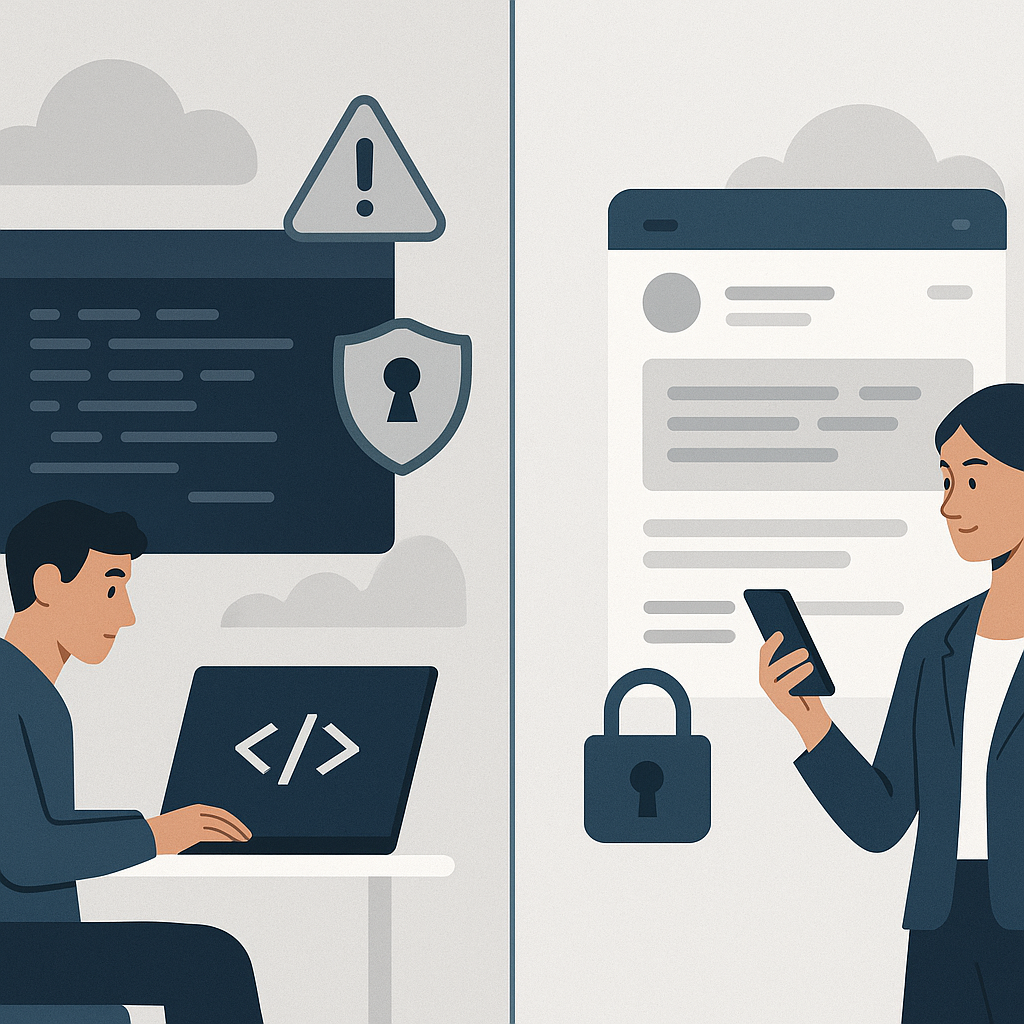
The pace of AI agent development has forced a critical decision point for mid-market business leaders in Q2 2026. In the span of a single week in March, the ecosystem fractured into distinct paths. NVIDIA announced NemoClaw at GTC 2026 to bring enterprise security to open-source models, Anthropic rolled out Claude Cowork Dispatch for remote desktop agent control, and open-source frameworks like OpenClaw continued to dominate developer mindshare.
For organizations operating with lean IT teams, choosing the right platform is no longer just about technical capability. It is fundamentally a question of security, deployment speed, and risk management. As companies evaluate mid-market AI agents 2026, the contrast between open-source flexibility and managed security has never been more pronounced.
The Security Dilemma of Open Source Agents
OpenClaw has emerged as the darling of the developer community, boasting massive adoption and unparalleled flexibility. However, that open architecture presents severe challenges for business deployment. Recent security audits in early 2026 revealed over 135,000 OpenClaw instances exposed to the public internet, with documented vulnerabilities in community-built skills.
For a business handling customer data, financial records, or compliance-bound information, deploying OpenClaw requires dedicated security staff, stringent network isolation, and continuous monitoring. While NVIDIA's alpha launch of NemoClaw aims to address these exact enterprise security gaps, analysts advise that it won't be ready for true production deployments until late 2026. For now, open-source agents remain a high-risk proposition for companies without enterprise-grade security infrastructure.
The Rise of Local Execution with Claude Cowork
Conversely, Anthropic's Claude Cowork has taken a decidedly different architectural approach, optimizing for immediate safety and usability. Cowork operates directly on the user's desktop, accessing local files and applications without routing sensitive corporate data through external processing servers. This local execution model provides a natural sandbox that aligns cleanly with corporate compliance requirements.
The recent launch of Claude Cowork Dispatch in March 2026 further bridged the usability gap. Employees can now assign complex tasks—like compiling pipeline reports from CRM data or summarizing client emails—directly from their mobile phones, while the execution happens securely on their workstation. This eliminates the need for complex API configurations or risky cloud integrations, making it an accessible automation tool for general knowledge workers.
Making the Deployment Call for Q2
The strategic advantage in 2026 does not belong to the companies experimenting with the most complex agent frameworks. It belongs to those driving measurable operational efficiency today. For most mid-market organizations, the directive is clear: deploy managed, secure solutions like Claude Cowork for specific, rule-based workflows such as document preparation and inbox triage.
By piloting these constrained use cases now, businesses can establish their internal AI governance and measure real hours saved. When enterprise-grade open-source solutions finally mature next year, these organizations will be positioned to scale their automation efforts based on hard internal data rather than industry hype.
For businesses ready to explore what AI agents can do for their operations, a quick conversation is the best place to start. Book a free discovery call.